
The Anatomy of an Ergonomic Office Chair: Five Key Dimensions
The core of a well-designed office chair lies in ergonomics-using a scientific structure and multi-dimensional adjustability to ensure the chair adapts to the human body's natural form, rather than forcing the user to conform to the chair. A modern office chair can be analyzed across five key dimensions: fundamental support, dynamic adjustability, materials and craftsmanship, safety and smart features, and selection and maintenance.

1. Fundamental Support
The primary role of an ergonomic office chair is to maintain the natural curvature of the spine while distributing body pressure evenly.
- Seat-height adjustment: Allows the user to sit with both feet flat on the floor, thighs parallel to the ground, and knees bent at approximately 90 degrees, helping protect the lumbar spine and knees.
- Seat-depth adjustment: When the back is against the backrest, there should be a gap of about two to four fingers' width between the front edge of the seat and the back of the knees to avoid pressure on blood vessels and nerves.
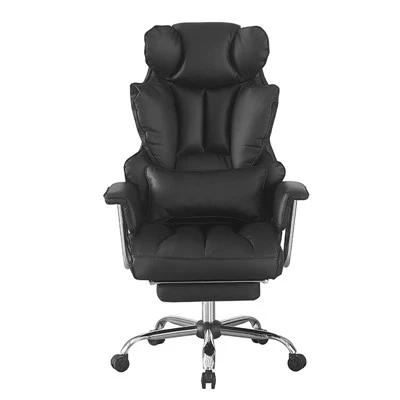
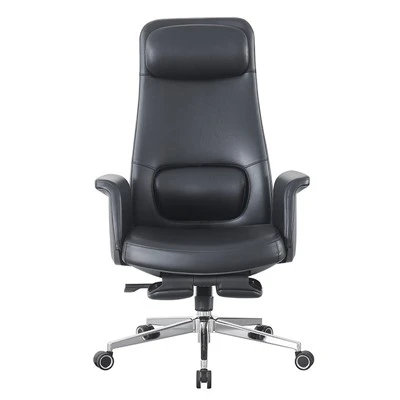
- Lumbar support: Should be height-adjustable to align with the lumbar vertebrae. Ideally, it also offers depth adjustment or dynamic tracking to maintain contact with the lower back when leaning forward or reclining.
- Headrest: Should provide height, angle, and depth adjustments, supporting the head and neck during reclining and reducing cervical spine pressure.
- Multi-directional armrests: Adjustable in height, depth, rotation, or flip-up position to support the forearms, keep the elbows naturally bent, and reduce shoulder and neck strain.
2. Dynamic Adjustability
Dynamic adjustability helps reduce fatigue caused by staying in a single static posture for long periods.
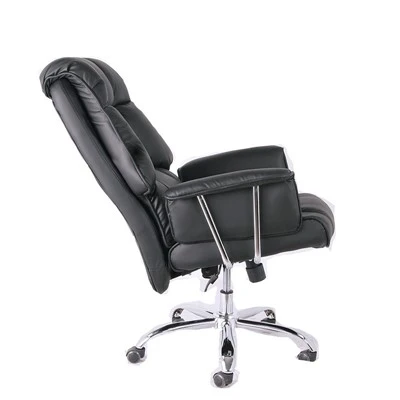
- Backrest recline: Typically ranges from 90° to 130° or more, allowing users to lean back and shift pressure points.
- Synchronized or independent recline: High-end chairs coordinate the movement of the backrest and seat cushion so the user's eye level remains relatively stable while reclining.
- Tilt tension adjustment: Allows users to adjust recline resistance based on body weight, ensuring smooth movement for lighter users and stable support for heavier users.
- Forward-tilt function: Encourages a forward pelvic tilt, helping maintain the natural lumbar curve during desk work and reducing pressure on intervertebral discs.

3. Materials and Craftsmanship
Materials and construction directly influence comfort, breathability, durability, and adaptability to different environments.
- Seat and backrest materials: High-density molded foam offers uniform support; high-elasticity mesh provides excellent breathability; memory foam and latex deliver a more contoured, enveloping feel.
- Mechanism (chassis): Connects the seat to the gas lift and controls recline, tilt, and locking functions. A high-quality mechanism ensures smooth movement and stable positioning.
- Base and casters: Commonly made from nylon, steel, or aluminum alloy, paired with silent omnidirectional casters for strong load-bearing capacity and smooth mobility.
4. Safety and Smart Features
Safety is the baseline requirement, while smart features represent the next stage of ergonomic chair development.
- Gas lift certification: The gas lift should meet international standards such as SGS, BIFMA, or TÜV, and comply with Class 2, Class 3, or Class 4 safety requirements.
- Explosion-proof protection: Many mechanisms include a thickened steel plate for additional safety under frequent adjustments and heavy loads.
- Smart functions: Some advanced chairs integrate pressure sensors, seat ventilation, heating, massage modules, or app-connected posture tracking, turning the chair into an active health-support device.

5. Selection and Maintenance
Choosing the right office chair depends on usage scenarios, body size, work habits, and environmental requirements.
- Daily office use: Prioritize lumbar support adjustability and seat cushion pressure distribution, especially for users who sit more than six hours a day.
- Shared or home-office use: Choose models with adjustable backrest, lumbar support, seat height, and seat depth to accommodate users of different heights and weights.
- Material selection: Mesh and foam suit most office environments; leather offers a premium look for conference rooms; memory foam can help improve comfort for home use.
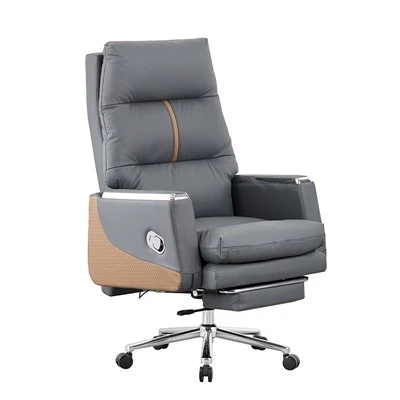
- Daily maintenance: Handle the chair carefully when moving it; periodically pat the seat cushion to reduce permanent indentations; check screws, casters, and gas lift stability; and clean according to material type.
- Safety reminder: Never attempt to disassemble the gas spring mechanism, and avoid prolonged exposure to direct sunlight or heat sources.
Summary
A modern office chair is more than a place to sit; it is an integrated system combining static support, dynamic adaptability, ergonomic materials, and safety design. When selecting an office chair, pay close attention to lumbar support fit, seat height and depth, recline smoothness, gas lift certification, and overall build quality. These factors together determine whether the chair can truly support long-term comfort, productivity, and spinal health.